
New Lighting Solutions for Mexican Coastal Cities: How Off-Grid Solar Streetlights Can Cope with Extreme Weather and Power Outages?
Changsha Kototerk Tech Co., Ltd. Rainer Chen
Keywords: Off-grid solar streetlights; Commercial outdoor lighting; Endurance lighting; Climate resilience; Coastal flood control; Mexico; Infrastructure financing
1. Introduction
Mexican coastal cities, such as Acapulco, which was recently devastated by Hurricane Otis, face enormous challenges from extreme weather events. These disasters cause widespread power outages, exposing the vulnerability of traditional infrastructure. The failure of public lighting systems is particularly dangerous for evacuation routes. In this context, off-grid solar streetlights, especially those with enhanced designs, demonstrate their unique value as distributed resilient infrastructure. They do not rely on the central power grid and can provide continuous lighting during disasters. This paper aims to provide a feasible technical solution and implementation path for the systematic planning and deployment of commercial solar streetlights in Mexican coastal regions, based on existing technical specifications, case experiences, and policy frameworks.
2. Technical Basis and Design Key of Off-Grid Solar Streetlights
Solar streetlights are independent off-grid systems, and their design needs to go beyond standard configurations to meet the specific needs of coastal environments.
2.1 Core Technical Components
Solar photovoltaic panels: Responsible for converting solar energy into electricity. Modern technologies such as micro-photovoltaic cells can be embedded in flexible materials, providing greater flexibility in lamppost design.
Endurance batteries: The core of industrial-grade solar-powered systems. The battery should be selected for its long cycle life (such as lithium-ion batteries), and a backup capacity of 3-7 days should be ensured.
LED lighting fixtures: These offer the advantages of high luminous efficiency, low power consumption, and long lifespan (up to 100,000 hours).
Smart controller: Manages the charging and discharging process, enabling automatic light sensing (Dusk to Dawn) dimming, and features overcharge, over-discharge, short-circuit protection, and temperature compensation.
2.2 Off-Grid and Wind Resistance Enhancement Design
To withstand coastal flooding and strong winds, special structural measures must be taken:
Structural reinforcement and elevated installation: The lamp posts should be made of corrosion-resistant materials such as hot-dip galvanized steel. Crucially, the battery and control unit should be installed at a higher position on the lamp post (recommended at least 2 meters above the ground) to avoid being submerged by floodwaters. All electronic components should have an IP67 or higher protection rating.
System redundancy and reliability: Endurance Solar Street Lights are equipped with multi-day backup power to ensure continuous operation during severe weather.
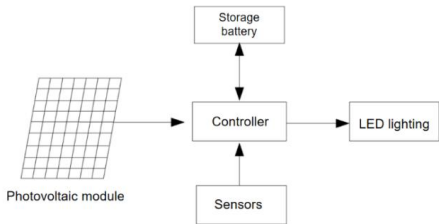
Figure 1: Schematic diagram of a typical off-grid solar street light system (Image concept source: Kototerk company product data)
3.1 Reliability Practices in Florida Communities
The solution provided by Sol Company demonstrates that off-grid solar street lights make them "immune to the increasingly frequent power outages and voltage dips in Florida." For new developments, this avoids the expensive cost of trenching and wiring.
3.2 Citywide Planning in Dania Beach
The successful experience of Dania Beach, Florida, can be summarized as follows:
Phased implementation and comprehensive planning: Starting with a pilot project, utilizing GIS (Geographic Information System) for asset management.
Funding strategy: Utilizing municipal bonds and Community Development Block Grants (CDBG) to address capital expenditures.
Technical specifications: Requiring batteries and photovoltaic panels to be installed at a high elevation, using tamper-proof fittings, and optimizing site selection to avoid shadows.
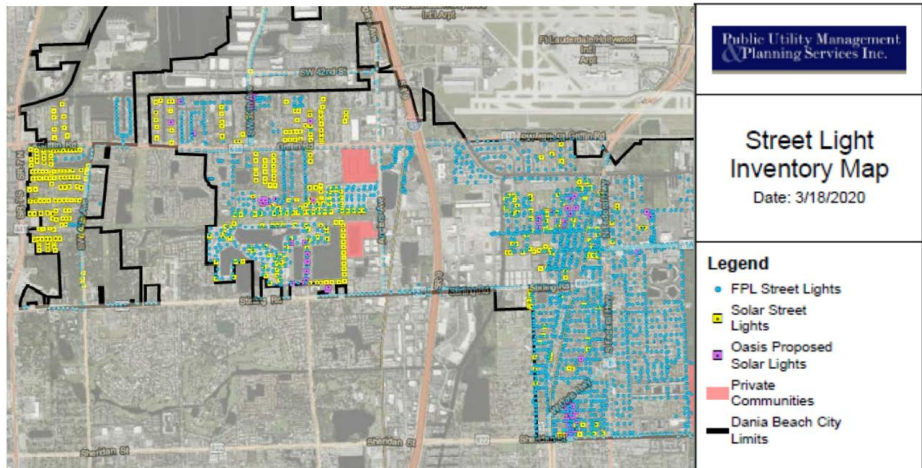
Figure 2: Schematic diagram of off-grid solar street lighting products suitable for coastal areas (Image concept source: Kototerk company product catalog)
4. Policies, Financing, and Challenge Mitigation Strategies
4.1 Innovative Financing Models
The initial investment for commercial off-grid solar streetlights may be higher than traditional streetlights, but their total life-cycle cost is lower. Feasible tools include:
Green Bonds: Mexico, as a major issuer, can utilize such bonds to support commercial solar landscape lighting.
Public-Private Partnerships (PPP): Project financing can be repaid through energy cost savings.
4.2 Challenges and Solutions
Initial Cost: Demonstrate the return on resilient investments (typically 4-7 times the initial cost).
Maintenance and Theft Prevention: Employ vandal-proof designs and GIS systems for asset management.
5. Conclusions and Recommendations
Deploying off-grid solar streetlights in Mexico's coastal areas is a core strategy for building climate-resilient cities.
Launch Demonstration Projects: Select key road sections in cities like Acapulco for pilot projects. Technical selection can refer to the standards of professional manufacturers such as Kototerk.
Develop Technical Standards: Refer to international best practices and develop efficient bidding specifications suitable for Mexico.
Explore Hybrid Financing: Combine green bonds with multilateral development bank funding.
References
[1] Allery, T. A. (2018). Solar Street Lighting for the Turtle Mountain Chippewa Tribe. Sandia National Laboratories.
[2] Bagnoli, L., & Cavallo, E. (Eds.). (2025). From Risk to Reliability: Resilient Infrastructure Services. IDB.
[3] Sol, Inc. (2024). Solar Street Lighting Resiliency Case Study.
[4] NREL. (2023). Solar Streetlights: Highland Park's Pathway to Power.
[5] Luo Songzeren. (2023). Design of Solar LED Street Lights in High-Altitude Areas. International Engineering Core Journal.
[6] Kototerk. (2026). Off-Grid Solar Street Light Systems. https://www.kototerk.com
Post time:Jan - 26 - 2026
