
I. Core Project Pain Points
Unreasonable DC/AC ratio in large-scale power plants, low inverter utilization and substandard power generation.
Non-standardized matching among modules, inverters, cables and mounting structures, leading to high O&M costs and major safety hazards.
Inaccurate land area estimation and low land utilization rate.
Mismatch between solar irradiance resources and system design, resulting in low PR value.
Excessive cable power loss and over-limit voltage drop, causing hidden power generation loss.
Improper selection of mounting structures for terrain, wind load and snow load, leading to high structural safety risks.
II. Expert Overall Solution (110MW AC Side)
System voltage class: 1500V
Grid-connected rated capacity: 110MW AC
DC side installed capacity: 137.5MWp
Recommended DC/AC ratio: 1.25: 1
System efficiency (PR): 81%–85%
Applicable standards: GB 50797, IEC 61724, IEC 61730, grid connection standards
III. PV Module Configuration
Selected Models
Single/Double-sided modules: 550Wp / 580Wp
Type: Monocrystalline PERC / TOPCon
Efficiency: 21.0%–22.5%
Quantity Calculation
550Wp:
Total modules = 137500000 ÷ 550 = 250,000 pcs
580Wp:
Total modules ≈ 237,069 pcs
String Design
Modules per string: 26 pcs
String power: 550W × 26 = 14.3kW
Operating voltage: 850–1000V
Open-circuit voltage: ≤1500V (safe for low-temperature conditions)
IV. Inverter Configuration (Two Mainstream Solutions)
Solution A: Central Inverter (Flat & Large Sites)
Unit power: 3.125MW
Quantity: 35 units
Total AC output: 109.375MW (close to 110MW)
Efficiency: ≥98.7%
Protection: IP65
Solution B: String Inverter (Mountain & Complex Terrain)
Unit power: 312.5kW
Quantity: 352 units
Multi-channel MPPT, suitable for complex scenarios with shading and slopes
V. Mounting System (Full Model & Quantity)
1. Mounting Type
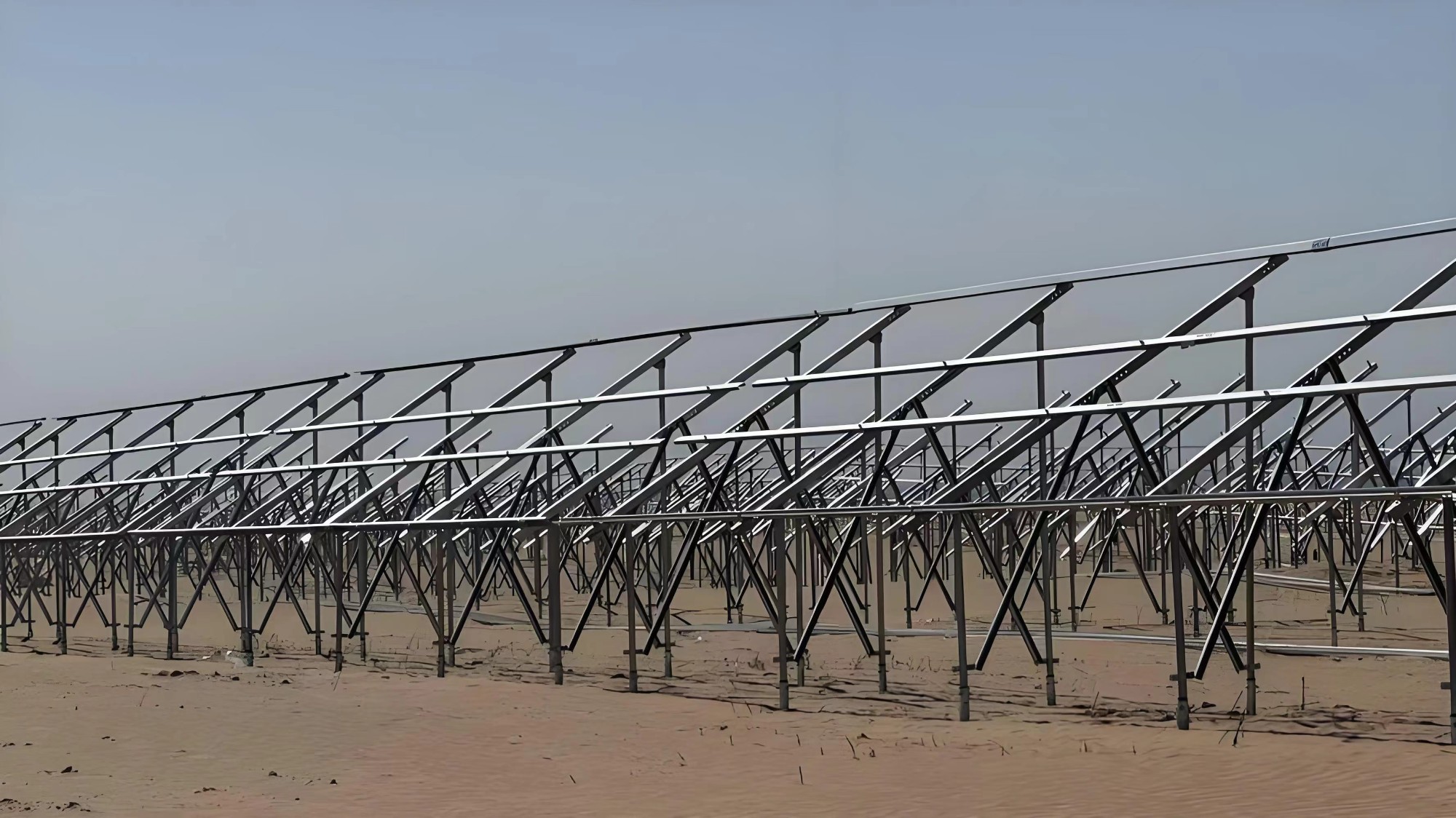
Fixed mounting: Aluminum alloy / Hot-dip galvanized steel C-channel
Type: Fixed-tilt mounting (optimal tilt 22°–38°, based on latitude)
Protection: Hot-dip galvanizing ≥65μm, anti-corrosion for 25 years
2. Mounting Quantity & Weight
Taking 550Wp modules as example:
1MWp requires approx. 40–45 tons of mounting structures
137.5MWp requires approx. 5500–6200 tons
Layout: 2×2 or 4×1 arrangement
Total mounting units: approx. 9,600 sets
3. Applicable Scenarios
Plain/Gobi: Fixed mounting is optimal
Mountainous area: Adjustable mounting / short-column mounting
High-wind area: Reinforced mounting, wind resistance ≥36m/s
VI. Cable Selection & Cross-Section Area
1. DC Cable (PV1-F Special PV Cable)
String to combiner box / inverter:
Specification: 1×4mm² / 1×6mm²
Recommendation: 6mm² for lower power loss
Total DC cable length: approx. 1800–2200km
2. AC Cable (Copper Core YJV22 Armoured)
Inverter to box-type transformer:
Specification: 3×120mm² / 3×150mm² / 3×185mm²
Box-type transformer to booster station:
35kV HV cable: YJV22-26/35kV-3×150/185mm²
Total AC cable length: approx. 60–80km
3. Design Principles
DC power loss: ≤2%
AC power loss: ≤1.5%
Voltage drop: ≤3%
VII. Land Occupation
1. Land Area
1MWp land occupation: 6.5–8 mu (flat ground)
137.5MWp total land occupation:
≈ 890–1100 mu
Equivalent to: ≈ 59.4–73.3 hectares
2. Site Requirements
Terrain: Priority for flat land, gentle slope, gobi, barren hill, coal mining subsidence area
Slope: ≤25°
Shading: No long-term shading
VIII. Solar Irradiance Conditions
1. Applicable Resource Zones
Annual total irradiation: 1200–1800 kWh/m²/year
Peak sun hours: 3.3–5.0h/day
2. Estimated Power Generation (110MW AC)
Annual power generation:
≈ 145–175 million kWh
IX. Box-Type Transformer & Boosting System
Box-type transformer: 35kV 3.15MVA
Quantity: 35 units
Booster station: 110kV primary boosting
Power factor: ≥0.95
Configuration: SVG dynamic reactive power compensation
X.Solution Advantages
Full-chain expert-level matching, no bottlenecks or waste.
Optimal design in line with national standards for power loss, voltage drop and DC/AC ratio.
Power generation 8%–12% higher than conventional solutions.
Safe and stable operation for 25 years, low operation and maintenance cost.
Suitable for all global irradiation zones, terrains and grid standards.
One-stop solution available: design, supply, EPC, O&M.
